
A work injury can leave you worried about medical bills and missed pay. If you were injured at work in Illinois, workers’ compensation benefits are generally available regardless of who was at fault for the accident. A workers’ compensation lawyer at LeFante Law Offices, P.C. can help you pursue the benefits you may be entitled to and address what to do if your claim is disputed or denied.
LeFante Law Offices, P.C. is a personal injury law firm founded in 2009 that represents individuals and families throughout Illinois who have been injured on the job. From offices in Peoria and Bloomington, the firm’s work injury lawyers handle workers’ compensation claims across the state, guided by an approach that centers on pursuing benefits.
Tell us about your case and our attorneys will contact you promptly








AV Preeminent Rated by Martindale-Hubbell

Million Dollar Advocates Forum Member: James P. LeFante

135+ Five-Star Google Reviews
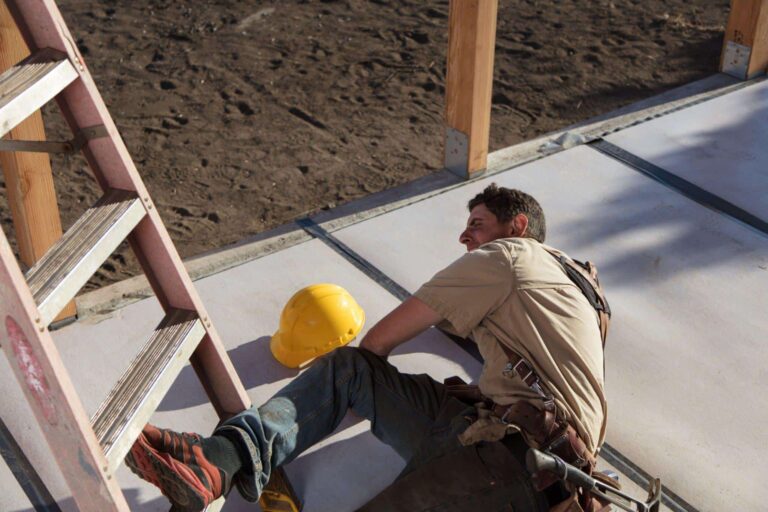
Illinois workers’ compensation is generally a no-fault system. In most cases, you do not need to prove your employer or a coworker did something wrong to receive benefits. You generally need to show that your injury arose out of and in the course of your employment. You must also meet notice, filing, and other eligibility requirements.
Being a no-fault system does not mean every claim is automatically approved. A claim may be denied or disputed for reasons that include:
The injury was intentionally self-inflicted. An injury that was intentionally self-inflicted is generally not covered.
Intoxication caused the injury or amounted to a departure from work. If your blood alcohol content was 0.08% or higher, there is evidence of impairment from unlawful or unauthorized drug use, or you refuse testing, Illinois law generally presumes that intoxication caused the injury. This presumption can be challenged, but it puts the burden on you to do so.
The injury happened while you were actively participating in horseplay unrelated to your job. Illinois law may treat this differently from ordinary carelessness or a simple mistake, which typically do not prevent you from receiving benefits. An innocent victim of a coworker’s horseplay may still qualify for benefits.
The injury happened outside the course of your employment. An injury during a purely personal errand, or during a substantial personal departure from work, is generally not covered.
An ordinary mistake or a moment of carelessness on your part generally does not disqualify you from benefits. These exceptions are narrower than many people assume, and an insurance company’s early suggestion that your claim does not qualify is not necessarily the final word.

In exchange for the no-fault system described above, Illinois law generally prevents an injured worker from suing their employer directly. This is often called the exclusive remedy rule, and workers’ compensation benefits are generally the only recovery available against your employer for a workplace injury.
There are narrow exceptions. You may be able to pursue a claim directly against your employer if the employer itself, not simply a coworker, intentionally caused your injury or expressly authorized it, or if your employer knowingly failed to maintain workers’ compensation coverage as required by law.
These exceptions are applied narrowly. An injury caused by a coworker’s misconduct, even serious misconduct, generally does not by itself open the door to a lawsuit against your employer, unless the employer itself is shown to have intended or authorized the injury. This is a different question from whether someone other than your employer might be separately responsible, which is addressed below.

Workers’ compensation is generally not your only option if someone other than your employer contributed to your injury. If a third party, such as another contractor on the job site, an equipment manufacturer, or a driver who caused a crash while you were performing your job duties, was also responsible, you may be able to pursue a separate claim against that party in addition to your workers’ compensation claim.
This distinction matters because workers’ compensation benefits do not include compensation for pain and suffering. A separate claim against a responsible third party can potentially provide that additional category of compensation, along with other damages that workers’ compensation does not cover. A third-party recovery may also require repayment of workers’ compensation benefits, which can affect the amount you keep.
If you were injured in a vehicle accident while working, our Illinois car accident attorneys handle those claims as well.
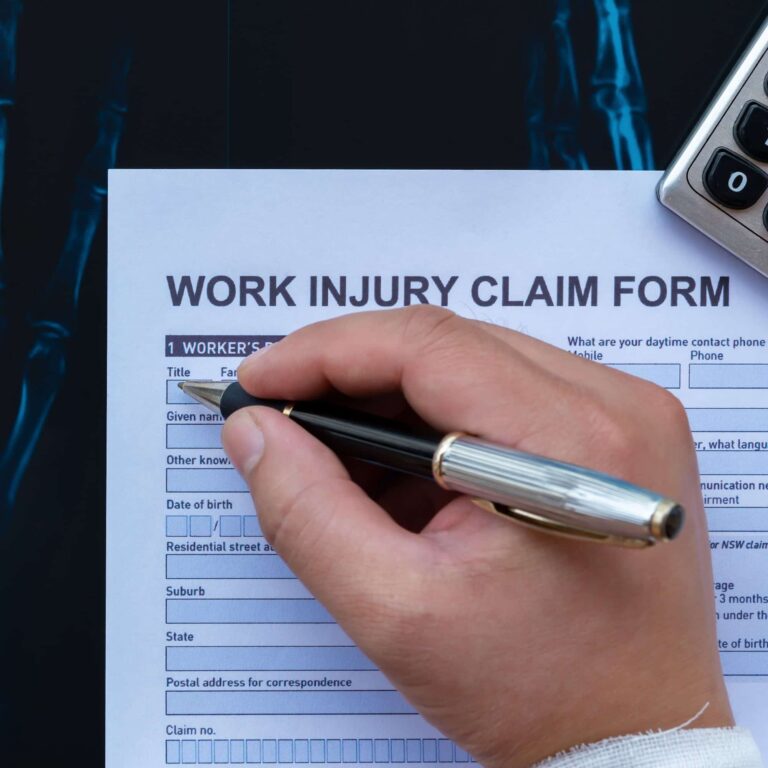
Workplace injuries happen in many ways. LeFante Law Offices represents workers who have experienced:
Whatever type of injury you experienced, the same starting point applies: was it connected to your job, and has your employer or its insurer treated your claim fairly?

Illinois workers’ compensation law generally provides several categories of benefits, depending on your injury and its effect on your ability to work.
Medical treatment. Reasonably necessary medical care related to your injury is generally covered.
Temporary total disability (TTD). If your injury temporarily prevents you from working at all, or your employer cannot accommodate your temporary work restrictions, you may be entitled to benefits generally equal to two-thirds of your average weekly wage while you recover, up to a maximum amount set by law.
Temporary partial disability and wage differential. If you can return to work in a lesser-paying or light-duty capacity while you recover, you may be entitled to a portion of the difference between what you would earn in your former job and your current earnings. Permanent work restrictions may instead support wage differential benefits.
Permanent partial disability (PPD). If your injury results in a permanent partial loss of use of a body part or your body as a whole, you may be entitled to compensation determined under the Illinois Workers’ Compensation Act. The exact calculation depends on the type of benefit and evidence of permanent disability, and is best explained by an attorney based on the specifics of your case.
Permanent total disability (PTD). If your injury leaves you permanently unable to perform work for which jobs are regularly available, you may be entitled to benefits that can continue for the rest of your life.
Vocational rehabilitation. If you cannot return to your previous line of work, you may be entitled to assistance transitioning to a new occupation.
Survivor benefits. If a workplace injury results in death, dependent family members may be entitled to benefits.
Workers’ compensation benefits are generally not treated as taxable income, though you should confirm your specific situation with a tax professional.

Workplace injuries range from a single traumatic accident to a condition that develops gradually. Injuries our clients have experienced include:
Gradual and repetitive conditions are also generally covered, including:
If your injury involves a brain injury, our Illinois brain injury attorneys can walk you through what that means specifically for your claim.

Work injury lawyers at LeFante Law Offices look closely at several things when a claim is delayed, disputed, or denied:
The reason given for the denial or dispute. Insurers cite a range of reasons, including a claim that the injury was not work-related, a pre-existing condition, or a dispute over the extent of your injury. Understanding the specific reason shapes how the firm responds.
Medical documentation. Consistent, well-documented medical treatment connecting your injury to your job is often central to overcoming a dispute.
Witness accounts and incident reports. Statements from coworkers or supervisors, and any incident report filed with your employer, can help establish what happened.
Insurance adjusters handling workers’ compensation claims may dispute whether an injury is work-related or which benefits are owed. James P. LeFante’s background as a former insurance defense attorney helps him assess and respond to these disputes.
If a claim is denied, the firm can pursue a formal claim with the Illinois Workers’ Compensation Commission on your behalf.

Report the injury to your employer. Illinois law generally requires you to notify your employer as soon as practicable and within 45 days of the accident. For repetitive injuries, the starting date can depend on when the injury and its connection to work became reasonably apparent. Occupational diseases have different notice rules. Reporting in writing, even briefly, can help avoid a later dispute about when or whether you gave notice.
Seek medical treatment promptly. Some injuries do not show symptoms immediately, and your medical records help connect your injury to your job.
Document what you can. If it is safe and practical to do so, take photographs of the accident scene or the condition that caused your injury, and get the names of anyone who witnessed it.
Be careful with statements to the insurance adjuster. You are not required to guess or speculate about how the accident happened, and it is generally best to avoid giving a detailed recorded statement before speaking with an attorney.
Contact a workplace injury lawyer. The sooner an attorney is involved, especially if your claim is disputed or denied, the sooner the firm can begin building your case.

Illinois law generally caps attorney fees in workers’ compensation cases at 20 percent of compensation recovered and paid. Depending on the claim, additional statutory limits may further reduce what an attorney can charge. No fee applies to undisputed medical expenses or timely, properly paid TTD benefits. The Commission may approve additional fees after a hearing.
You pay no attorney fees upfront, and there is no attorney fee to you unless benefits are recovered on your behalf. The written fee agreement you sign will set out the exact fee and how any case expenses are handled, including whether you owe expenses if no benefits are recovered.

Generally, you have three years from the date of your injury to file a claim with the Illinois Workers’ Compensation Commission, or two years from the date of your last workers’ compensation payment, whichever is later. Notifying your employer does not itself file a claim with the Commission. Claims involving occupational diseases can follow a different timeline.
This filing deadline is separate from the applicable employer notice requirement described above. Missing either one can affect your right to benefits, so it is best to speak with an attorney as soon as possible rather than waiting to see how your recovery progresses.

Former Insurance Defense Experience. Founding attorney James P. LeFante spent years representing insurance companies before switching sides to represent injured people. That experience shapes how the firm responds when a workers’ compensation insurer disputes or delays a claim.
Experience With Disputed and Denied Claims. The firm works to identify why a claim was denied and to build the documentation needed to challenge that decision.
Clear Fee Terms. Illinois law generally limits what any workers’ compensation attorney can charge, and your written agreement explains how those rules apply to your case and how expenses are handled.
Post-Settlement Advocacy. The firm’s work does not stop once your claim is resolved. LeFante Law Offices also reviews outstanding bills and liens to help clarify what must be paid and who is responsible.
LeFante Law Offices has recovered tens of millions of dollars for injured clients throughout Illinois, with 135+ five-star Google reviews from past clients. Past results do not guarantee a similar outcome in any future case.