
The truck accident lawyers at LeFante Law Offices, P.C. help injured people and families pursue compensation after crashes involving semis, tractor-trailers, delivery trucks, and other commercial vehicles. These claims can involve several businesses, different layers of insurance, and important records held by the carrier or another company. A five-axle tractor-trailer can have a lawful gross weight of 80,000 pounds in Illinois, and some permitted loads weigh more. A crash with a vehicle of that size can cause catastrophic harm.
LeFante Law Offices, P.C. is a personal injury law firm founded in 2009 that represents individuals and families throughout Illinois injured in truck accidents. From offices in Peoria and Bloomington, the firm’s truck accident attorneys handle claims across the state, guided by an approach that centers on full recovery, not just a settlement check: physical healing, financial stability, and the support to move forward.
Tell us about your case and our attorneys will contact you promptly








AV Preeminent Rated

Million Dollar Advocates Forum

135+ Five-Star Google Reviews
Truck accident claims can involve rules and records that usually do not arise in an ordinary passenger-vehicle case. Interstate motor carriers and their drivers are generally subject to the Federal Motor Carrier Safety Regulations. Illinois has also adopted many of those standards for covered intrastate operations, with specific exceptions.
Depending on the operation and applicable rules, relevant records may include driver qualification files, drug and alcohol testing records, inspection and maintenance records, dispatch information, and Hours of Service logs.
For most property-carrying drivers covered by 49 C.F.R. § 395.3, the driver must take 10 consecutive hours off duty before starting a shift. The driver may then drive for up to 11 hours during a 14-hour period and generally must have a 30-minute interruption in driving after eight cumulative hours behind the wheel.
Drivers are also subject to limits of 60 on-duty hours in seven days or 70 hours in eight days, depending on the carrier’s operations. Short-haul, agricultural, and other exceptions may apply.
A regulatory violation does not automatically establish liability. If an applicable rule was violated and the violation contributed to the crash, it may provide important evidence in support of a negligence claim.
The evidence must establish the cause of a truck crash. Issues that commonly require investigation include:
Driver fatigue and Hours of Service violations. Dispatch records, electronic logs, fuel receipts, and communications may show that a driver exceeded applicable limits or was given an unsafe delivery schedule.
Distracted or drowsy driving. Phone use, navigation equipment, in-cab devices, or fatigue can delay a driver’s response. A truck’s stopping performance also depends on its speed, load, brakes, road grade, and surface conditions.
Driving under the influence of alcohol or drugs. Federal regulations prohibit a commercial driver from performing safety-sensitive work with an alcohol concentration of 0.04 or greater. This rule is separate from Illinois criminal DUI law and other federal alcohol restrictions.
Failure to properly inspect or maintain the truck. Neglected inspection or repair, a defective component, improper inflation, overloading, or a road hazard may cause a brake failure or tire blowout. Maintenance and inspection records can help establish what happened.
Improperly loaded or unsecured cargo. Cargo that shifts or falls can affect the truck’s balance, steering, and braking. Responsibility may depend on who loaded, secured, and inspected the cargo.
Wide turns and blind spots. Commercial trucks need more room to turn and have substantial areas around the cab and trailer that may not be visible to the driver. Drivers must account for these limitations before turning or changing lanes.
Underride crashes. These crashes occur when part of a smaller vehicle travels beneath the rear or side of a truck or trailer. An investigation may examine the condition and regulatory compliance of any rear-impact guard, along with lighting, reflective markings, vehicle positioning, and driver conduct.
Hazardous roadway or weather conditions. Commercial drivers may need to reduce their speed, increase following distance, or stop operating when conditions become too dangerous. The investigation should consider the weather, roadway, traffic, and each driver’s actions.
Truck accidents can affect anyone on the road, not just the people in the vehicle a truck hits directly. LeFante Law Offices represents:
Whatever type of commercial vehicle was involved, from a long-haul semi to a local delivery van, the same questions apply: what caused the crash, and who is responsible.
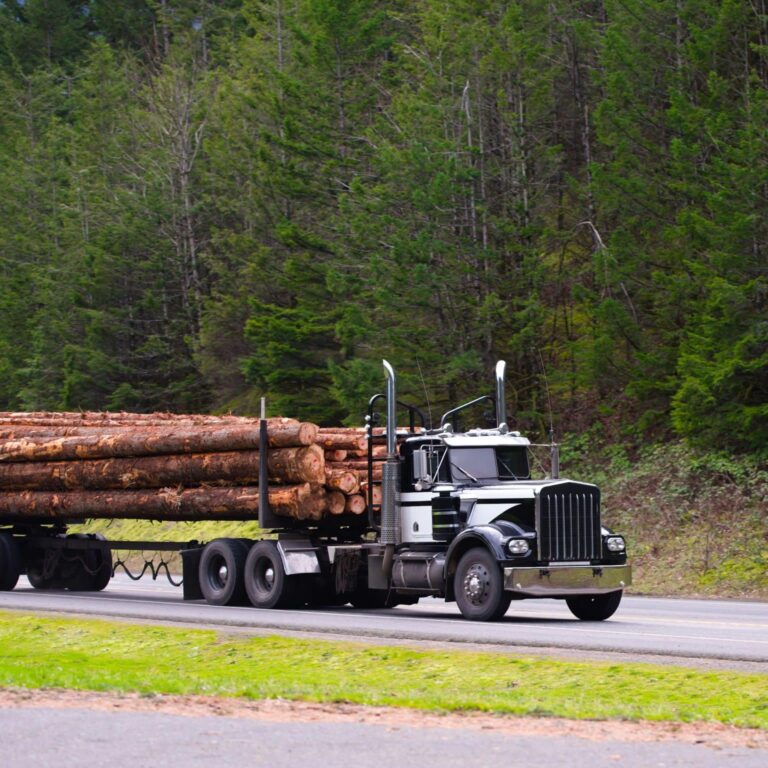
A truck accident claim may involve several potentially responsible parties. Liability depends on what each person or business did, their relationships, and whether that conduct contributed to the crash.
The truck driver. Speeding, distraction, fatigue, or impairment can all support a claim directly against the driver.
The motor carrier. A carrier may be responsible for a driver’s negligence when the driver was acting within the scope of an employment or agency relationship. Depending on the facts, the carrier’s own conduct may also be relevant, including its hiring, supervision, training, dispatch practices, and vehicle maintenance.
A freight broker. A broker may be a potential defendant when the evidence supports a state-law claim that it negligently selected an unsafe carrier. In the 2026 case of Montgomery v. Caribe Transport II, LLC, the U.S. Supreme Court held that federal law did not preempt the negligent-hiring claim at issue because the statutory motor-vehicle safety exception applied. The Court did not decide that the broker was negligent or liable. The case was returned to the lower courts for further proceedings.
A shipper or loading company. A business that loaded or secured the cargo may bear responsibility if its conduct created an unsafe load and contributed to the crash. Responsibility depends on who performed or controlled the work.
A maintenance provider. A company that negligently inspected, serviced, or repaired the truck may be responsible if its work contributed to a mechanical failure.
A parts manufacturer or seller. A product-liability claim may be available if a defective tire, brake component, steering part, or other product contributed to the crash.
A government entity. Unsafe road design or maintenance may sometimes support a claim against a state or local entity. Government claims are subject to special procedures, immunities, and potentially shorter deadlines.

Federal law currently requires at least $750,000 in financial responsibility for a for-hire carrier operating in interstate or foreign commerce, using a vehicle with a gross vehicle weight rating of at least 10,001 pounds, and transporting non-hazardous property. Certain operations involving oil or hazardous materials require $1 million or $5 million. The applicable minimum depends on the carrier, vehicle, cargo, and type of operation under 49 C.F.R. Part 387.
These minimums do not establish what a claim is worth or guarantee that a particular amount will be available. A proper insurance investigation may include primary and excess coverage and policies held by any driver, carrier, broker, shipper, loader, maintenance provider, or manufacturer whose conduct is legally connected to the crash.

A truck accident investigation may involve several different forms of evidence:
Electronic vehicle and driver data. Depending on the truck and its equipment, information may be stored in an engine control module, electronic logging device, telematics system, dash camera, braking system, or another module. These systems record different information and follow different retention schedules. The firm promptly sends targeted preservation requests and seeks inspection or download of relevant data when available.
Scene evidence. When a scene visit is useful and practical, James P. LeFante may inspect the location, photograph physical evidence, and speak with available witnesses. Police photographs, measurements, video, and reconstruction evidence may also be important.
The truck’s USDOT number. The USDOT number can help identify the entity registered with the Federal Motor Carrier Safety Administration and provide access to public identification, inspection, crash, and safety-rating information. It is an investigative starting point. It does not, by itself, establish which company is legally responsible.
Carrier and driver records. Depending on the case, relevant evidence may include the driver qualification file, Hours of Service records, dispatch communications, bills of lading, inspection reports, maintenance records, and drug or alcohol testing records.
Insurance adjusters and trucking company defense teams move quickly after a serious crash. James P. LeFante’s background as a former insurance defense attorney means he recognizes these tactics, having seen them used from the other side.
The scope of the investigation depends on the evidence. When litigation is necessary, the firm prepares the case with depositions, expert evidence, and trial requirements in mind.
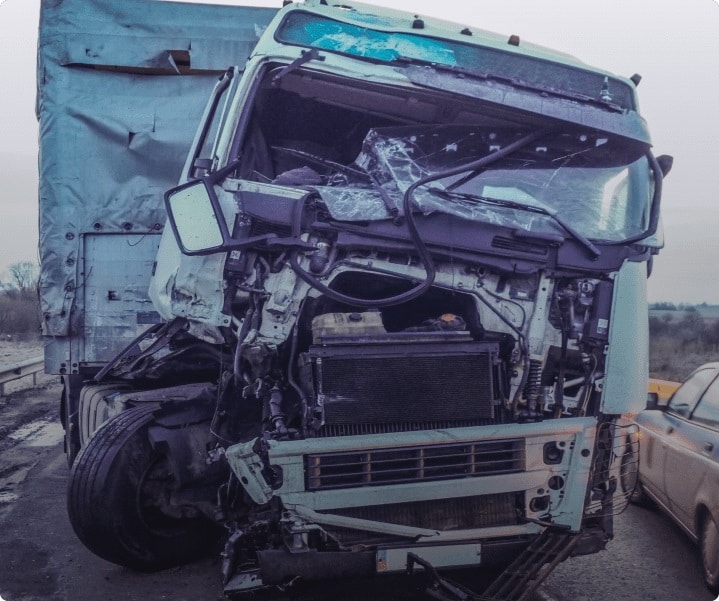
The force of a truck crash can cause injuries ranging from painful soft-tissue damage to permanent disability. Possible injuries include:
If your injury involves a brain or spinal cord injury, our Illinois brain injury attorneys can walk you through what that means specifically for your claim. If a truck accident took the life of someone you love, our Illinois wrongful death attorneys can talk with you about a wrongful death claim.

Get to a safe place and call 911. If you can safely and lawfully move out of active traffic, do so. Call for emergency assistance if anyone may be injured.
Get medical care. If you do not go to the hospital by ambulance, arrange a medical evaluation as soon as reasonably possible. Some injuries are not immediately obvious, and medical records can document when your symptoms began.
Report the crash to the police. Ask how to obtain the crash report once it is available.
Document what you safely can. Photograph the vehicles, road, visible injuries, license plates, unit and trailer numbers, company markings, and the truck’s USDOT number. The USDOT number may help identify a registered entity, although it does not determine liability. Do not put yourself at risk or delay medical care to take photographs.
Be careful with insurance communications. You generally do not have to give a recorded statement to the trucking company’s insurer. Your own insurer may request cooperation under your policy. Get advice before giving a recorded statement or signing a release or settlement document, and never guess or speculate about what happened.
Consider speaking with a truck accident lawyer promptly. Different records and electronic systems follow different retention schedules. Prompt preservation efforts may help prevent relevant evidence from being altered, overwritten, or lost.

If you were injured in a truck accident, you may be able to recover compensation for:
Punitive damages may be available in limited cases involving conduct beyond ordinary negligence, such as willful and wanton disregard for safety. These damages are meant to punish and deter. In a bodily-injury negligence action, Illinois generally requires the plaintiff to obtain court permission before adding a punitive-damages request to the complaint. The plaintiff must show a reasonable likelihood of proving facts that could support the award at trial. Availability depends on the evidence, the defendant, and the type of claim.
Past results do not guarantee a similar outcome, and the value of any claim depends on the specific facts of your case.

There is no fixed formula for valuing a truck accident claim. But relevant factors may include:
Liability and comparative fault. The evidence must show who contributed to the crash and whether the injured person shares any responsibility.
The injuries and prognosis. The nature of the injuries, necessary treatment, expected recovery, permanent limitations, and need for future care can all affect the damages. The medical evidence must also connect the injuries to the crash.
Financial and personal losses. Medical expenses, lost income, reduced earning capacity, pain, disability, disfigurement, and loss of a normal life are evaluated from the available evidence.
The quality of the evidence. Witness accounts, video, physical evidence, electronic data, and reliable medical documentation can affect how clearly liability and damages can be proved.
Applicable safety violations. A regulatory violation may strengthen a claim when the rule applied, and the violation contributed to the crash.
Insurance and collectability. Available primary and excess coverage can have a major practical effect on recovery, but insurance limits do not necessarily establish the legal value of the damages. Other collectible assets may also be relevant.
The existence of several defendants does not automatically make a case more valuable. Liability and damages must be established against each party from whom recovery is sought.

Former Insurance Defense Experience. Founding attorney James P. LeFante spent years representing insurance companies before switching sides to represent injured people. That experience shapes how the firm approaches every truck accident claim, including how trucking companies and their insurers build their defense.
Prompt, Thorough Investigation. The firm sends preservation requests, reviews carrier and driver records, and seeks relevant electronic data when it is available. The investigation follows the evidence to identify the people and businesses whose conduct may have contributed to the crash.
Contingency-Fee Representation. You pay nothing upfront, and legal fees only come out of money the firm recovers on your behalf. The written agreement we enter into with you will explain the fee percentage and how we will handle case expenses.
Post-Settlement Advocacy. The firm’s work does not stop once a settlement or verdict is reached. LeFante Law Offices also negotiates with medical providers to help reduce outstanding bills and liens, so clients keep more of what they recover.
LeFante Law Offices has recovered tens of millions of dollars for injured clients throughout Illinois, with 135+ five-star Google reviews from past clients. Past results do not guarantee a similar outcome in any future case.
A motor carrier and its insurers may begin investigating soon after a serious crash. Prompt legal advice can help preserve records, identify witnesses, and give you time to understand any request for a recorded statement or signed release.
When you call, have a few things ready: photos from the accident scene, your medical records, the police report (if you have it), and any correspondence you have received from the trucking company or its insurer. Our attorneys will review your case, explain your options, and help you understand what to expect.
Call LeFante Law Offices, P.C. today at (309) 999-1111, or request your free case review online, to talk with an attorney about what happened. There is no fee unless we win.
LeFante Law Offices, P.C. – Peoria 456 Fulton Street, Suite 410, Peoria, IL 61602 (309) 999-1111
LeFante Law Offices, P.C. – Bloomington 121 N Main St, Suite 210, Bloomington, IL 61701 (309) 869-8309
Truck claims may involve federal or Illinois motor-carrier safety rules, depending on the carrier and type of operation. They can also require evidence held by several businesses, including electronic records, driver files, maintenance records, dispatch communications, and cargo documents. More than one person or company may be responsible.
Possibly. A freight broker may be a potential defendant when the evidence supports a state-law claim that it negligently selected an unsafe carrier. In Montgomery v. Caribe Transport II, LLC, the U.S. Supreme Court held that federal preemption did not bar the negligent-hiring claim at issue. The Court did not decide that the broker was negligent or liable, so the outcome still depends on state law and the evidence.
Depending on the evidence, potentially responsible parties may include the motor carrier, freight broker, shipper, loading company, maintenance provider, parts manufacturer, or a government entity. The presence of several parties does not itself establish liability or guarantee additional insurance coverage.
You can generally still recover compensation. Illinois follows a modified comparative negligence rule, meaning that as long as you are not found more than fifty percent at fault, you can still pursue a claim, though your compensation may be reduced by your share of fault.
Illinois personal injury lawsuits generally must be filed within two years after the claim accrues, which is often the date of the crash. Different rules may apply to wrongful death claims, injured minors, claims involving delayed discovery, and claims against government entities. Some claims against local public entities must be filed within one year. Because the correct deadline depends on the parties and facts, do not rely on the general two-year period without obtaining advice about your specific claim.
You pay nothing upfront. LeFante Law Offices works on a contingency fee basis, meaning the firm is paid only a percentage of what it recovers for you. If there is no recovery, you owe nothing for legal representation.