
Motorcycle accident lawyers at LeFante Law Offices, P.C. help injured riders investigate what happened, identify potentially liable parties and insurance coverage, and pursue compensation supported by the evidence. They also respond when an insurer relies on stereotypes about motorcyclists. Riders lack the enclosed structure, seat belts, and conventional airbag protection available to occupants of passenger vehicles, so a motorcycle crash can cause severe injuries.
LeFante Law Offices, P.C. is a personal injury law firm founded in 2009 that represents individuals and families throughout Illinois who have been injured in motorcycle accidents. From offices in Peoria and Bloomington, the firm’s motorcycle accident attorneys handle claims across the state, guided by an approach that centers on full recovery, not just a settlement check: physical healing, financial stability, and the support to move forward.
Tell us about your case and our attorneys will contact you promptly








AV Preeminent Rated

Million Dollar Advocates Forum

135+ Five-Star Google Reviews
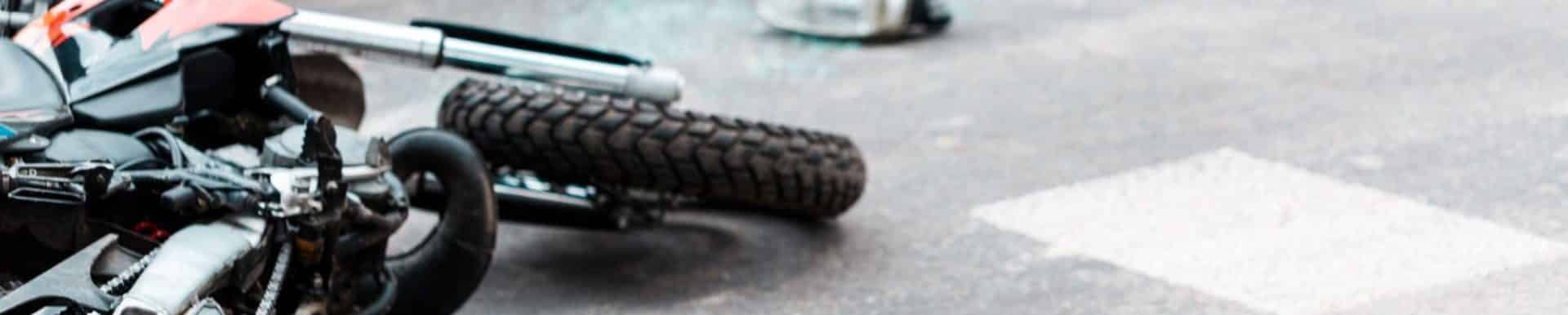
Motorcycles lack the enclosed structure and occupant restraints found in passenger vehicles. Based on 2024 fatality rates per vehicle mile traveled, the National Highway Traffic Safety Administration reports that motorcyclists were almost 27 times more likely than passenger car occupants to die in a motor vehicle crash and almost five times more likely to be injured.
A motorcycle crash may result from an unsafe left turn or lane change, speeding, following too closely, impaired or distracted driving, a hazardous road condition, or a defective motorcycle or component. Liability depends on the evidence in the individual case.
Depending on the cause, potentially responsible parties may include another driver, an employer whose worker was acting within the scope of employment, a manufacturer or seller of a defective product, or a public entity responsible for a road condition. Claims against public entities may face special immunity rules and shorter filing deadlines.

Illinois currently does not require motorcycle operators or passengers to wear helmets. It does require every operator and passenger to use glasses, goggles, or a transparent shield. Under 625 ILCS 5/11-1404, a transparent shield includes a qualifying face shield or a motorcycle windshield that extends above the operator’s eyes in the normal upright riding position. Contact lenses alone do not satisfy the statute.
Illinois appellate authority also rejects the “helmet defense.” In Hukill v. DiGregorio, 136 Ill. App. 3d 1066 (2d Dist. 1985), the court upheld the exclusion of helmet non-use evidence when it was offered to prove comparative negligence or mitigate damages. A rider’s failure to wear a helmet does not establish who caused the collision. Under Hukill, helmet non-use is also inadmissible when offered to reduce damages on those grounds.
An insurer may still ask whether a rider was wearing a helmet, particularly when the claim involves a head injury. The rider should answer truthfully and avoid speculating about medical causation. An attorney can address whether the question is legally relevant.
This legal rule is separate from safety guidance. NHTSA recommends wearing a properly fitted, DOT-compliant motorcycle helmet.
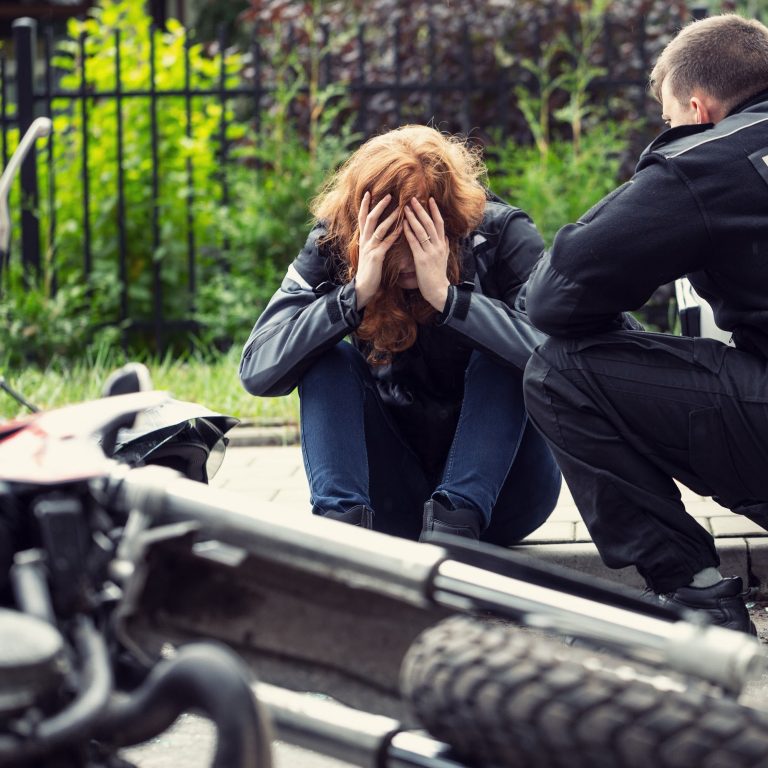
LeFante Law Offices represents:
The firm builds each case around the available facts and applicable law and addresses unsupported assumptions about motorcyclists.

Motorcycle accident attorneys at LeFante Law Offices may examine several forms of evidence, depending on the facts of the crash:
Available vehicle data. Some involved vehicles may contain event data recorders or other electronic information. When relevant, the firm can seek to preserve the vehicle and arrange for qualified professionals to determine whether data exist and can be downloaded. Availability depends on the vehicle’s make, model, model year, systems, condition, and the circumstances of the crash.
Scene evidence. When warranted, the firm may inspect the crash location or work with investigators and experts to document road conditions, sight lines, debris, marks, signage, and other evidence that could change or disappear.
Police reports and witness statements. These materials may preserve observations, statements, and witness identities. A police report or traffic citation does not by itself determine civil liability.
Insurance adjusters handling motorcycle claims sometimes rely on the same rider-bias assumptions discussed above, as well as the tactics used in any car accident case. James P. LeFante’s background as a former insurance defense attorney means he recognizes these tactics, having seen them used from the other side.
The firm reviews the relevant evidence and, when useful, related traffic proceedings. It prepares matters for litigation when negotiation cannot achieve a fair resolution.
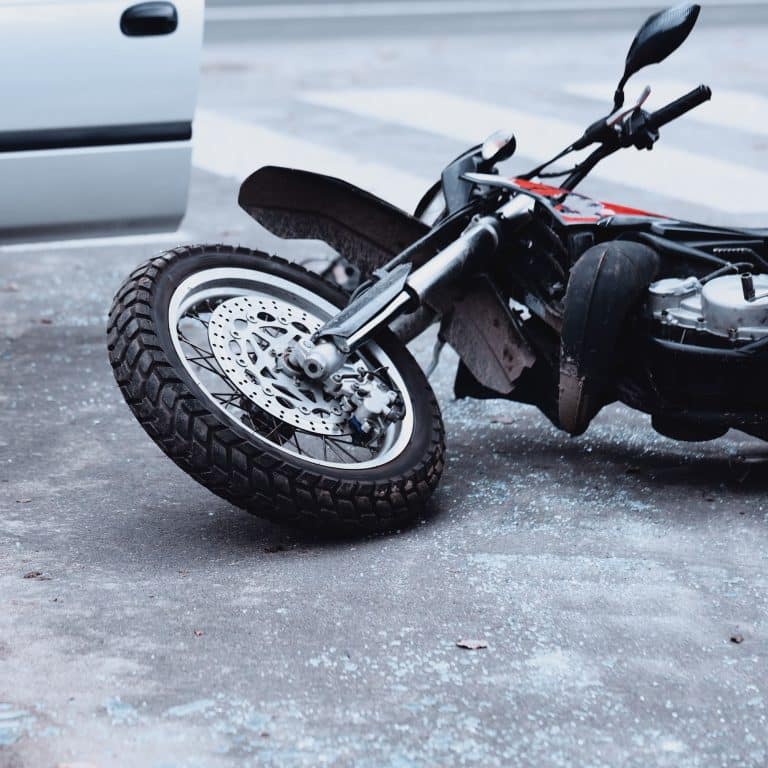
Call 911 and seek appropriate medical care. Accept an emergency assessment after a serious impact or when you have any apparent injury, and follow the medical advice you receive.
Report the crash and remain at or near the scene. Illinois law requires you to notify law enforcement immediately when a crash causes injury or death, and in certain property-damage crashes. If possible, move yourself and the motorcycle out of active traffic without leaving the vicinity. Exchange the information required by law and cooperate with responding officers.
Document what you safely can. Photograph the vehicles, crash location, road conditions, visible injuries, and nearby signs or signals. Obtain witness contact information when possible. Do not enter traffic to collect evidence.
Give law enforcement accurate information, but do not guess about speed, distance, injuries, or legal fault. Always answer questions truthfully. Before giving an insurer a recorded statement, consider obtaining legal advice about the request and your policy obligations.
Contact a motorcycle accident lawyer. Prompt involvement may help preserve video, physical evidence, witness accounts, and any available vehicle data.

Illinois generally requires liability insurance for motorcycles designed for use on public highways. The minimum liability limits are $25,000 for bodily injury or death to one person, $50,000 for bodily injury or death to two or more people in one crash, and $20,000 for property damage in one crash under 625 ILCS 5/7-203 and 625 ILCS 5/7-601.
If the responsible driver has little or no insurance, uninsured or underinsured motorist coverage under the motorcycle policy or another potentially applicable policy may provide an additional source of recovery. Coverage depends on the policy language, insured people, listed vehicles, exclusions, limits, endorsements, and procedural requirements. Do not assume that a household automobile policy either covers or excludes the motorcycle. Have the complete policies reviewed before accepting a liability settlement or signing a release.

Illinois follows modified comparative negligence under 735 ILCS 5/2-1116. A person found 50 percent or less at fault may recover damages, reduced by that person’s percentage of fault. A person found more than 50 percent at fault cannot recover.
Helmet non-use does not establish who caused a collision. Under Hukill, it is inadmissible when offered to prove comparative negligence or mitigate damages. Fault ordinarily turns on conduct connected to the crash, including right of way, speed, following distance, lane movements, lookout, and compliance with traffic laws.


Former Insurance Defense Experience. Founding attorney James P. LeFante spent years representing insurance companies before switching sides to represent injured people. That experience shapes how the firm responds when an insurer relies on assumptions about riders rather than the facts of the crash.
A Personal Connection to Riding. As a motorcycle enthusiast, James P. LeFante understands riders’ safety concerns and the evidence that can matter after a crash.
Available Vehicle Data. The firm works to preserve and analyze event data from equipped vehicles. Whether useful data exist and can be retrieved depends on the vehicles and circumstances involved.
No Fee Unless We Win. You pay nothing upfront, and legal fees only come out of money the firm recovers on your behalf.
Post-Settlement Advocacy. The firm may negotiate medical bills and liens after a case resolves. In one reported matter, this work saved a client $180,000. The available firm material does not identify that matter as a motorcycle case.
The firm’s results for motorcycle accident clients include a $725,000 settlement. Past results do not guarantee a similar outcome in any future case.
If an insurer has asked about helmet use, riding gear, speed, visibility, or fault, an attorney can assess whether the issue is legally relevant and what evidence may answer it. Prompt investigation may help preserve physical evidence, video, witness accounts, and available vehicle data.
When you call, share whatever documents you already have, such as photographs, medical records, the police report, insurance policies, and correspondence from an insurer. You do not need to collect everything before contacting the firm.
Call LeFante Law Offices, P.C. today at (309) 999-1111, or request your free case review online, to talk with an attorney about what happened. There is no fee unless we win.
LeFante Law Offices, P.C. – Peoria 456 Fulton Street, Suite 410, Peoria, IL 61602 (309) 999-1111
LeFante Law Offices, P.C. – Bloomington 121 N Main St, Suite 210, Bloomington, IL 61701 (309) 869-8309